Defining and Measuring Quality of Life: Theoretical and Empirical Frameworks
Synopsis
This chapter introduces the theoretical and empirical framework used in this monograph to analyse quality of life as understood within the context of the Summer School: Quality of Life in a Changing World. It begins with a brief overview of philosophical perspectives on the good life, followed by a review of the main contemporary approaches and key dimensions. Next, the chapter discusses the measurement of quality of life through indicators and outlines current debates. It then examines long-term European trends over the past three decades across economic, social and environmental indicators, showing how these trajectories reflect a rapidly changing world in which gains in economic growth and human development coexist with stagnation or decline in several social and environmental dimensions, revealing clear development paradoxes. Finally, the chapter presents the empirical research reports produced during the Summer School and links the conceptual foundations and long-term trends to the everyday experiences of quality of life in Maribor and other European contexts.
Downloads
Pages
1-26
Published
January 29, 2026
Categories
Copyright (c) 2026 University of Maribor, University of Maribor Press

How to Cite
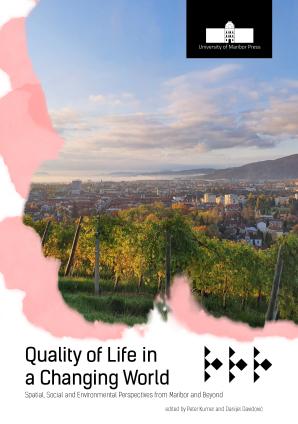
Davidović, D., & Kumer, P. (2026). Defining and Measuring Quality of Life: Theoretical and Empirical Frameworks. In P. Kumer & D. Davidović (Eds.), Quality of Life in a Changing World: Spatial, Social and Environmental Perspectives from Maribor and Beyond (pp. 1-26). University of Maribor Press. https://doi.org/10.18690/um.ff.2.2026.1