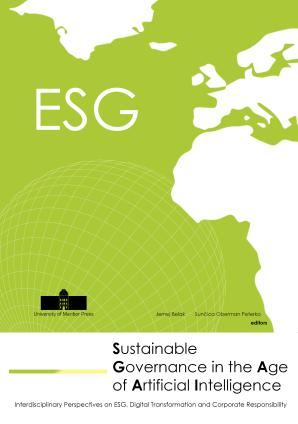
Sustainable Governance in the Age of Artificial Intelligence: Interdisciplinary Perspectives on ESG, Digital Transformation and Corporate Responsibility
Ključne besede:
trajnostno upravljanje; digitalna transformacija; umetna inteligenca; ESG; korporativno upravljanjeKratka vsebina
Trajnostno upravljanje v dobi umetne inteligence: interdisciplinarni pogledi na ESG, digitalno preobrazbo in korporativno odgovornost. Mednarodna znanstvena monografija obravnava sodobne izzive in priložnosti na področju upravljanja, trajnostnega razvoja in digitalne transformacije v času hitrega tehnološkega napredka. Prispevki avtorjev iz različnih držav in znanstvenih disciplin osvetljujejo vpliv umetne inteligence, ESG-pristopov, trajnostnega korporativnega upravljanja, inovacij, regulative ter digitalnih tehnologij na delovanje organizacij, institucij in družbe. Posebna pozornost je namenjena vprašanjem odgovornega upravljanja, trajnostnega odločanja, organizacijske prilagodljivosti in ustvarjanja dolgoročne vrednosti v spreminjajočem se globalnem okolju. Monografija združuje teoretične prispevke, empirične raziskave in študije primerov ter ponuja interdisciplinarne vpoglede v razvoj sodobnih modelov upravljanja. Namenjena je raziskovalcem, visokošolskim učiteljem, študentom, odločevalcem in strokovnjakom iz prakse, ki jih zanimajo povezave med trajnostjo, upravljanjem, inovacijami in digitalno preobrazbo.
Poglavja
-
Financial Literacy, Digital Inclusion, and Sustainable Economic Governance:Comparative Evidence from the Western Balkans
-
Developing Circular Economy Business Models – One of the Tools for Effectively Navigating the ESG
-
The Role of Artificial Intelligence in the Sustainability of Marketing Activities:Control of Digital Marketing Activities and Digital Analytics
-
Contemporary Concepts of Digital Marketing Campaigns:Artificial Intelligence and Environmental Responsibility
-
Electric Mobility and Tourism – Designing a Model for Charging Infrastructure in Seasonal Tourism Regions
-
Assessing Disclosure Quality of Workforce Transformation under ESRS S1:An IRO–PATM Analysis of the Automotive Industry
-
Lecturers’ Professional Readiness for the Use of AI:An Analysis of Students’ Perceptions
-
Sustainability Leadership Development Among Students in Higher Education:Evidence From Ukraine
-
Differences in Financial Performance of Firms with Established Controlling Depending on the Use of AI
-
From Reporting to Transformation:A Review of AI Tools Enabling Sustainability Governance Across Multi-Tier Supply Chains
-
Integrating Zero-Waste Management into Corporate Governance:An Application of the MER Model of Integral Management and Governance
-
A Practice-Based Governance Framework for Managing Digital and Sustainable Transformation
-
From Compliance to Commitment:The Role of Culture in Embedding ESG into Corporate Governance
-
Blockchain as a Governance Infrastructure for ESG Compliance in European Supply Chains
-
Socio-Economic Effects of Demolishing Squatter Settlements in Noorpur Shahan, Islamabad:An ESG Perspective
-
An Empirical Study of Microsoft Copilot Adoption in Financial Technology:Productivity, Performance, and Trust Perspectives
-
Environmental Accounting and ESG Integration in Hungary’s Energy Sector:A Study of the Top Corporations and their Subsidiaries
-
Spatial And Socio-Demographic Patterns Of Urban Light Pollution And Future Interventions
-
Regional Circular Economy Knowledge Hubs As Future Enablers Of The Green Transition In EGTC-Based Cross-Border Cooperation
-
Urban Sustainability Transitions Towards Asbestos-Free Municipalities
-
AI Anxiety and Workforce Resilience Through ESG Social Responsibility and Adult Education
-
Integrating The Social Dimension Of ESG Into Circular Business Model Transformations
-
Testing the Weak-Form Efficient Market Hypothesis in Selected Central and Eastern European Markets
-
From Traditional to AI-Augmented Project Management: Rethinking Governance and Managerial Roles
-
Development of a Model for Measuring the Quality of Corporate Governance in Insurance Groups in the Context of Cross-Border Operations
-
Urban Governance as a Foundation of Sustainable Tourism Development:The Case of Wiener Neustadt
-
Time, Exposure and Social Sustainability in the National Identity of International Students
-
Determinants of National Identity Among International Students Abroad
-
Empowering Sustainable Governance:The Role of Green Public Procurement and Certifications in Hungary
-
Environmentally Conscious Principles In Event Management
-
Foreign Direct Investment and Economic Growth:Evidence from OECD Countries (2010-2023)
-
Artificial Intelligence Transformation in Higher Education:Student Literacy, Ethical Perceptions, and Institutional Governance
-
Greenwashing and Greenhushing in the Hungarian Consumer Market
-
Artificial Authenticity:The Transparency Paradox in SME Marketing
-
Can Algorithms Be Trusted? Consumer Trust and Loyalty in AI-Generated Brand Communication
-
Navigating the Grey Zone:Sustainable AI Governance and Leadership in SMEs
-
Does Institutional Quality Shape the Laffer Curve? Evidence from Selected EU Economies
-
The Hidden Carbon Cost of Short-Form Video AI:Examining the Sustainability Paradox in Social Media Marketing
-
Education Technologies and Institutional Boundaries:Education–Business Interaction in the Context of Industry 5.0
-
Judo Agents:A Gentle Way to Hybrid Reality
-
Digital Transformation of Customer Experience in SMEs Evidence from Hungarian Firms
-
Auditor’s Professional Judgement and the Emergence of Artificial Intelligence in External Auditing
-
Consumer Communities and Second-Hand Clothing Swaps as Drivers of Circularity in Fashion Industry
-
The Determinants of ESG Data Requirements for SMEs in the European Union:Insights and Challenges from Hungary
-
Digital Resilience in the Age of AI:The Role of Media and Information Literacy (MIL) in Empowering Gen Z and Enhancing ESG Outcomes
-
Artificial Intelligence in Marketing:A Bibliometric Mapping of Central and Eastern European Research
-
Interplay of Endogenous Resources and Exogenous Forces in Driving Strategic Agility:A Mixed-Methods Study
-
Mixed Embeddedness and Institutional Constraints:A Bibliometric Analysis of Ethnic Entrepreneurship (2015–2025)
-
Electric Vehicle Adoption:A Tpb-Based Conceptual Framework With Esg and Policy Insights From Slovakia
-
AI-Enabled ESG Integration in Banking Decision-Making:Governance Implications in European and Emerging Financial Systems
-
Navigating Between Environmental and Social Sustainability:Different Paths of EU Electricity Production Transformation and Their Impact on Household Consumers Electricity Prices
-
Developing Soft Communication Skills With Virtual Reality and Artificial Intelligence
-
Audience Engagement With Electric, Hybrid and Internal Combustion Vehicle Content Among Automotive Creators
-
Artificial Intelligence as a Catalyst for Social Entrepreneurship and Volunteering Engagement
-
Digital Lag or Sustainable Leap? Strategic Paths for Emerging Economies in the AI Age
-
Understanding Anticonsumption in Tourism Services:A Qualitative Study of Young Slovenian Travelers
-
Labour Market Resilience and New Employment Models in the Context of Digital and Green Transformations for Sustainable Economic Development
-
Just Transition in European Coal Regions:Comparative Analysis of Good Practices under the European Green Deal
-
The Impact of Television News Coverage of Rising and Falling Prices on Food, Gas, and Rent Price Change Expectations in the United States
-
Integrating ESG Principles and Responsible Artificial Intelligence Governance:A Sustainable Transformation Framework for Turbulent Markets
-
ESG and AI-Driven Governance Transformation in the Construction Industry:A Case-Based Analysis from Slovenia
-
Application of Machine Learning and Artificial Intelligence for Enhancing Reliability and Operational Efficiency in Rural Electric Power Systems
-
Theme Prevalence and Co-Occurrence in Managerial Perceptions of AI Integration in Physical Retail:A Descriptive Qualitative Content Analysis
-
Financial Health of Local Governments and Its Connection with ESG
-
Consumer Trust in the Artificial Intelligence Era:Influence of Data Protection Practices on Purchase Intention
-
Digital Student Identity Systems and Sustainable Governance in Higher Education:An Empirical Study Using the Technology Acceptance Model
-
Knowledge Architecture for Viable Sustainability Disclosure
-
Gender Equality and Its Spill over Effects on Education, Employment, and Institutions within Sustainable Development:An Indian Perspective
-
An Examination of The Challenges Associated with Olfactory Stimuli in Museum Services:A Systematic Review of Visitor-Centric Strategies
-
Corporate Sustainability Due Diligence as a Transformative Element of EU Corporate Law
-
Internationalization Strategy as Sustainable Governance:Navigating ESG and AI Transformation
Prenosi
Podatki o prenosih še niso na voljo.
Literatura
Prenosi
Izdano
3 julija 2026
Kategorije
Avtorske pravice (c) 2026 Univerza v Mariboru, Univerzitetna založba

Podrobnosti o formatu publikacije na voljo: E-knjiga (pdf)
E-knjiga (pdf)
THEMA Subject Codes (93)
KJMV; KJG; KJS, UYQ; KJH
ISBN-13 (15)
978-961-299-166-1
COBISS.SI ID (00)
Date of first publication in original language (20)
03.07.2026
Kako citirati
Belak, J., & Oberman Peterka, S. (Ur.). (2026). Sustainable Governance in the Age of Artificial Intelligence: Interdisciplinary Perspectives on ESG, Digital Transformation and Corporate Responsibility. Univerzitetna založba Univerze v Mariboru. https://doi.org/10.18690/um.epf.7.2026