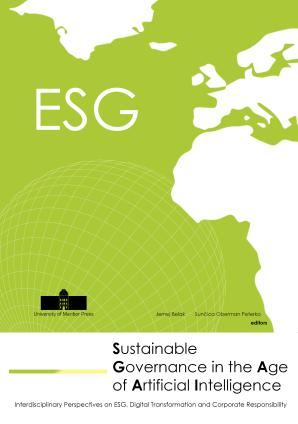
Sustainable Governance in the Age of Artificial Intelligence: Interdisciplinary Perspectives on ESG, Digital Transformation and Corporate Responsibility
Keywords:
sustainable governance, digital transformation, artificial intelligence, ESG, corporate governanceSynopsis
This international scientific monograph explores contemporary challenges and opportunities in governance, sustainability, and digital transformation in an era of rapid technological advancement. Bringing together contributions from researchers across different countries and disciplines, the volume examines how artificial intelligence, ESG frameworks, corporate responsibility, innovation, regulatory developments, and digital technologies are reshaping organizations, institutions, and society. Particular attention is given to sustainable governance, responsible decision-making, organizational adaptation, and the creation of long-term value in increasingly complex environments. The chapters combine theoretical insights, empirical research, and case studies, offering interdisciplinary perspectives on the evolving relationship between technology, sustainability, and governance. By bridging academic knowledge and practical implications, the monograph contributes to current debates on sustainable development, responsible innovation, and governance transformation. It is intended for researchers, academics, students, policymakers, and practitioners interested in the future of governance, sustainability, and digital change.
Chapters
-
Financial Literacy, Digital Inclusion, and Sustainable Economic Governance:Comparative Evidence from the Western Balkans
-
Developing Circular Economy Business Models – One of the Tools for Effectively Navigating the ESG
-
The Role of Artificial Intelligence in the Sustainability of Marketing Activities:Control of Digital Marketing Activities and Digital Analytics
-
Contemporary Concepts of Digital Marketing Campaigns:Artificial Intelligence and Environmental Responsibility
-
Electric Mobility and Tourism – Designing a Model for Charging Infrastructure in Seasonal Tourism Regions
-
Assessing Disclosure Quality of Workforce Transformation under ESRS S1:An IRO–PATM Analysis of the Automotive Industry
-
Lecturers’ Professional Readiness for the Use of AI:An Analysis of Students’ Perceptions
-
Sustainability Leadership Development Among Students in Higher Education:Evidence From Ukraine
-
Differences in Financial Performance of Firms with Established Controlling Depending on the Use of AI
-
From Reporting to Transformation:A Review of AI Tools Enabling Sustainability Governance Across Multi-Tier Supply Chains
-
Integrating Zero-Waste Management into Corporate Governance:An Application of the MER Model of Integral Management and Governance
-
A Practice-Based Governance Framework for Managing Digital and Sustainable Transformation
-
From Compliance to Commitment:The Role of Culture in Embedding ESG into Corporate Governance
-
Blockchain as a Governance Infrastructure for ESG Compliance in European Supply Chains
-
Socio-Economic Effects of Demolishing Squatter Settlements in Noorpur Shahan, Islamabad:An ESG Perspective
-
An Empirical Study of Microsoft Copilot Adoption in Financial Technology:Productivity, Performance, and Trust Perspectives
-
Environmental Accounting and ESG Integration in Hungary’s Energy Sector:A Study of the Top Corporations and their Subsidiaries
-
Spatial And Socio-Demographic Patterns Of Urban Light Pollution And Future Interventions
-
Regional Circular Economy Knowledge Hubs As Future Enablers Of The Green Transition In EGTC-Based Cross-Border Cooperation
-
Urban Sustainability Transitions Towards Asbestos-Free Municipalities
-
AI Anxiety and Workforce Resilience Through ESG Social Responsibility and Adult Education
-
Integrating The Social Dimension Of ESG Into Circular Business Model Transformations
-
Testing the Weak-Form Efficient Market Hypothesis in Selected Central and Eastern European Markets
-
From Traditional to AI-Augmented Project Management: Rethinking Governance and Managerial Roles
-
Development of a Model for Measuring the Quality of Corporate Governance in Insurance Groups in the Context of Cross-Border Operations
-
Urban Governance as a Foundation of Sustainable Tourism Development:The Case of Wiener Neustadt
-
Time, Exposure and Social Sustainability in the National Identity of International Students
-
Determinants of National Identity Among International Students Abroad
-
Empowering Sustainable Governance:The Role of Green Public Procurement and Certifications in Hungary
-
Environmentally Conscious Principles In Event Management
-
Foreign Direct Investment and Economic Growth:Evidence from OECD Countries (2010-2023)
-
Artificial Intelligence Transformation in Higher Education:Student Literacy, Ethical Perceptions, and Institutional Governance
-
Greenwashing and Greenhushing in the Hungarian Consumer Market
-
Artificial Authenticity:The Transparency Paradox in SME Marketing
-
Can Algorithms Be Trusted? Consumer Trust and Loyalty in AI-Generated Brand Communication
-
Navigating the Grey Zone:Sustainable AI Governance and Leadership in SMEs
-
Does Institutional Quality Shape the Laffer Curve? Evidence from Selected EU Economies
-
The Hidden Carbon Cost of Short-Form Video AI:Examining the Sustainability Paradox in Social Media Marketing
-
Education Technologies and Institutional Boundaries:Education–Business Interaction in the Context of Industry 5.0
-
Judo Agents:A Gentle Way to Hybrid Reality
-
Digital Transformation of Customer Experience in SMEs Evidence from Hungarian Firms
-
Auditor’s Professional Judgement and the Emergence of Artificial Intelligence in External Auditing
-
Consumer Communities and Second-Hand Clothing Swaps as Drivers of Circularity in Fashion Industry
-
The Determinants of ESG Data Requirements for SMEs in the European Union:Insights and Challenges from Hungary
-
Digital Resilience in the Age of AI:The Role of Media and Information Literacy (MIL) in Empowering Gen Z and Enhancing ESG Outcomes
-
Artificial Intelligence in Marketing:A Bibliometric Mapping of Central and Eastern European Research
-
Interplay of Endogenous Resources and Exogenous Forces in Driving Strategic Agility:A Mixed-Methods Study
-
Mixed Embeddedness and Institutional Constraints:A Bibliometric Analysis of Ethnic Entrepreneurship (2015–2025)
-
Electric Vehicle Adoption:A Tpb-Based Conceptual Framework With Esg and Policy Insights From Slovakia
-
AI-Enabled ESG Integration in Banking Decision-Making:Governance Implications in European and Emerging Financial Systems
-
Navigating Between Environmental and Social Sustainability:Different Paths of EU Electricity Production Transformation and Their Impact on Household Consumers Electricity Prices
-
Developing Soft Communication Skills With Virtual Reality and Artificial Intelligence
-
Audience Engagement With Electric, Hybrid and Internal Combustion Vehicle Content Among Automotive Creators
-
Artificial Intelligence as a Catalyst for Social Entrepreneurship and Volunteering Engagement
-
Digital Lag or Sustainable Leap? Strategic Paths for Emerging Economies in the AI Age
-
Understanding Anticonsumption in Tourism Services:A Qualitative Study of Young Slovenian Travelers
-
Labour Market Resilience and New Employment Models in the Context of Digital and Green Transformations for Sustainable Economic Development
-
Just Transition in European Coal Regions:Comparative Analysis of Good Practices under the European Green Deal
-
The Impact of Television News Coverage of Rising and Falling Prices on Food, Gas, and Rent Price Change Expectations in the United States
-
Integrating ESG Principles and Responsible Artificial Intelligence Governance:A Sustainable Transformation Framework for Turbulent Markets
-
ESG and AI-Driven Governance Transformation in the Construction Industry:A Case-Based Analysis from Slovenia
-
Application of Machine Learning and Artificial Intelligence for Enhancing Reliability and Operational Efficiency in Rural Electric Power Systems
-
Theme Prevalence and Co-Occurrence in Managerial Perceptions of AI Integration in Physical Retail:A Descriptive Qualitative Content Analysis
-
Financial Health of Local Governments and Its Connection with ESG
-
Consumer Trust in the Artificial Intelligence Era:Influence of Data Protection Practices on Purchase Intention
-
Digital Student Identity Systems and Sustainable Governance in Higher Education:An Empirical Study Using the Technology Acceptance Model
-
Knowledge Architecture for Viable Sustainability Disclosure
-
Gender Equality and Its Spill over Effects on Education, Employment, and Institutions within Sustainable Development:An Indian Perspective
-
An Examination of The Challenges Associated with Olfactory Stimuli in Museum Services:A Systematic Review of Visitor-Centric Strategies
-
Corporate Sustainability Due Diligence as a Transformative Element of EU Corporate Law
-
Internationalization Strategy as Sustainable Governance:Navigating ESG and AI Transformation
Downloads
Download data is not yet available.
References
Downloads
Published
July 3, 2026
Categories
Copyright (c) 2026 University of Maribor, University of Maribor Press

Details about the available publication format: E-book (pdf)
E-book (pdf)
THEMA Subject Codes (93)
KJMV; KJG; KJS, UYQ; KJH
ISBN-13 (15)
978-961-299-166-1
COBISS.SI ID (00)
Date of first publication in original language (20)
2026-07-03
How to Cite
Belak, J., & Oberman Peterka, S. (Eds.). (2026). Sustainable Governance in the Age of Artificial Intelligence: Interdisciplinary Perspectives on ESG, Digital Transformation and Corporate Responsibility. University of Maribor Press. https://doi.org/10.18690/um.epf.7.2026