Lifelong Learning of Employees: Is Generative Artificial Intelligence Becoming the Most Important Source of Knowledge?

Authors

Nik Klobasa
University of Ljubljana, Faculty of Economics
Jana Žnidaršič
University of Ljubljana, Faculty of Economics

Synopsis

The chapter addresses lifelong learning among employees in the context of the rapid development of artificial intelligence, comparing the role of formal, informal education and generative AI tools, when employees search for knowledge. The theoretical part highlights the importance of continuous knowledge upgrading, and shows the advantages of formal and informal education, which is largely supported by AI. The empirical part is based on qualitative research with employee interviews. The findings show that AI is used primarily for the rapid acquisition of explicit knowledge, but not tacit knowledge and knowledge based on years of experience and intuition. The research confirms that the role of mentors in the AI era is not decreasing, but rather transforming. The mentor is no longer the only source of knowledge, but becomes primarily a guide for critical assessment and interpretation of information. AI does not replace existing forms of learning, but changes the structure between formal, informal and self-regulated learning. The latter is becoming increasingly important. It continuously complements informal and formal education, which remains crucial for the systematic acquisition of key knowledge and new competencies, career advancement and the acquisition of officially recognized qualifications.
Author Biographies

Nik Klobasa, University of Ljubljana, Faculty of Economics

Nik Klobasa is a Master's student in International Business at the School of Economics and Business, University of Ljubljana, where he previously completed his Bachelor's degree in Entrepreneurship. During his undergraduate studies, he actively participated in the governance and decision-making bodies of both the School of Economics and Business and the University of Ljubljana, serving, among other roles, as a member of the Senate, the Governing Board, and several other committees. He further developed his leadership and governance competencies as Vice President of the Student Council of the University of Ljubljana and Vice President of the Student Council of the School of Economics and Business. His professional interests focus primarily on management, international business, and organizational development, with a particular emphasis on bridging academic knowledge and business practice.

Ljubljana, Slovenia. E-mail: nik11klobasa@gmail.com

Jana Žnidaršič, University of Ljubljana, Faculty of Economics

Jana Žnidaršič, Ph.D., is an associate professor at the Faculty of Economics, University of Ljubljana (the Department of Management and Organization). Her academic research interests cover modern human resource theory, communication with people at work, organizational learning, non-profit management, and developing knowledge-based organizations. However, her special field of interest is age management, which is also the main topic covered within her dissertation. Apart from the academic world, she has been working also for the business sector, consulting or lecturing (mainly HRM) on challenges that include workplace learning, motivation, strategic communication, intergenerational issues, talent management and age management. 

Ljubljana, Slovenia, E-mail: jana.znidarsic@ef.uni-lj.si

Downloads

Published

July 20, 2026

License

Creative Commons License

This work is licensed under a Creative Commons Attribution 4.0 International License.

How to Cite

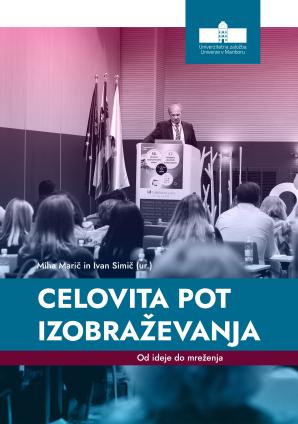
Klobasa, N., & Žnidaršič, J. (2026). Lifelong Learning of Employees: Is Generative Artificial Intelligence Becoming the Most Important Source of Knowledge? In M. Marič & I. Simič (Eds.), Celovita pot izobraževanja: Od ideje do mreženja (pp. 59-102). University of Maribor Press. https://doi.org/10.18690/um.fov.6.2026.2