Artificial Intelligence Transformation in Higher Education: Student Literacy, Ethical Perceptions, and Institutional Governance
Kratka vsebina
The rapid integration of Artificial Intelligence (AI) into higher education poses significant challenges for institutional management and sustainable governance. This paper examines the ongoing AI transformation by exploring three primary dimensions: student AI literacy, ethical perceptions of academic integrity, and the psychological impacts of technology adoption. Employing a Systematic Literature Review (SLR) that strictly follows PRISMA guidelines, this study systematically reviews 42 recent peer-reviewed articles from the Scopus database, extracts 12 core studies, and maps the multifaceted effects of generative tools such as ChatGPT, Copilot, and Gemini. The findings reveal a critical “illusion of competence”, where students’ technical proficiency significantly outpaces their critical evaluation skills. The lack of clear institutional directives exacerbates unintentional academic over-reliance and blurs ethical boundaries. The review highlights a rising phenomenon of algorithmic anxiety, primarily driven by the deployment of unreliable AI content-detection systems that undermine the student-educator trust dynamic. This research also underscores the necessity for universities to transition from restrictive policies to comprehensive educational frameworks, ensuring the responsible use of generative technologies while safeguarding students’ cognitive development and mental well-being.
Prenosi
Strani
615-630
Izdano
3 julija 2026
Kategorije
Avtorske pravice (c) 2026 Univerza v Mariboru, Univerzitetna založba

Kako citirati
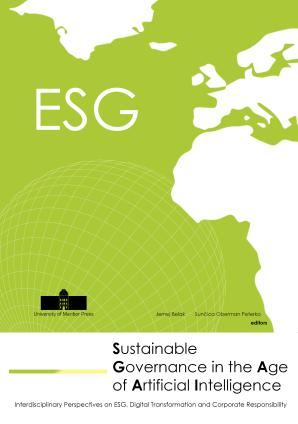
Szeberényi, A., Kozma, D. E., Balku, R., & Pajor, B. (2026). Artificial Intelligence Transformation in Higher Education: Student Literacy, Ethical Perceptions, and Institutional Governance. V J. Belak & S. Oberman Peterka (Ur.), Sustainable Governance in the Age of Artificial Intelligence: Interdisciplinary Perspectives on ESG, Digital Transformation and Corporate Responsibility (str. 615-630). Univerzitetna založba Univerze v Mariboru. https://doi.org/10.18690/um.epf.7.2026.32