Work Performance through the Lens of Digital Human Resource Management
Synopsis
Based on contemporary scientific literature, this paper conceptualises work performance with particular emphasis on the distinctions between individual performance, work efficiency, and adaptive performance. Through a literature review approach, a conceptual delineation of these constructs is provided and situated within the framework of digital human resource management. The findings indicate that the digital work environment has a significant influence on work performance indicators, shapes the expectations placed on employees, and directs the development of their digital competencies. Work performance is increasingly closely associated with digital literacy, adaptive performance, and the ability to work effectively in teams. Digitally competent employees achieve better outcomes in digital work environments, with digital human resource management playing an important guiding role. Through structured training initiatives, digital human resource management systematically strengthens employees’ digital literacy, thereby contributing to higher individual and organisational performance in the contemporary digital environment.
Downloads
Pages
15-26
Published
March 17, 2026
Categories
- 2026
- Economics
- Logistics
- Mathematics
- Entrepreneurship
- Bussiness
- Computer Science and Informatics
- Sociology
- Mechanical Engineering
- Tourism
- Organizational Sciences
- Criminal Justice and Security
- Ecology
- Educational sciences
- Health Sciences
- Conference proceedings
- Open Access
- University of Maribor, Faculty of Organizational Sciences
- Slovene language
- English language
- Multilingual
Copyright (c) 2026 University of Maribor, University of Maribor Press

How to Cite
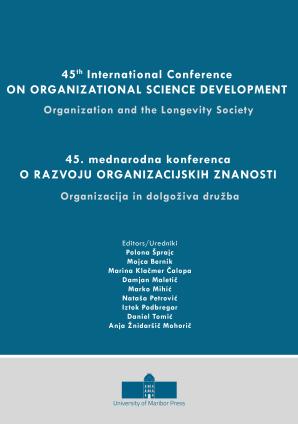
Bernik, N. (2026). Work Performance through the Lens of Digital Human Resource Management. In P. Šprajc, M. Bernik, M. Klačmer Čalopa, D. Maletič, M. Mihić, N. Petrović, I. Podbregar, D. Tomić, & A. Žnidaršič Mohorič (Eds.), & (Ed.), 45th International Conference on Organizational Science Development: Organization and the Longevity Society, Conference Proceedings (Vols. 45., pp. 15-26). University of Maribor Press. https://doi.org/10.18690/um.fov.3.2026.2